
Hospitals do not lose revenue in the ledger first.
They lose it in the space between approval, evidence, payer communication, follow-up discipline, and operational memory.
Flowtra Healthcare
Flowtra Healthcare is focused on one high-value outcome: helping hospitals stop losing insurance revenue because payer movement, operational follow-up, evidence readiness, and response execution drift apart. It surfaces the work that matters and automates parts of the response loop where repetition slows teams down.
They lose it in the space between approval, evidence, payer communication, follow-up discipline, and operational memory.
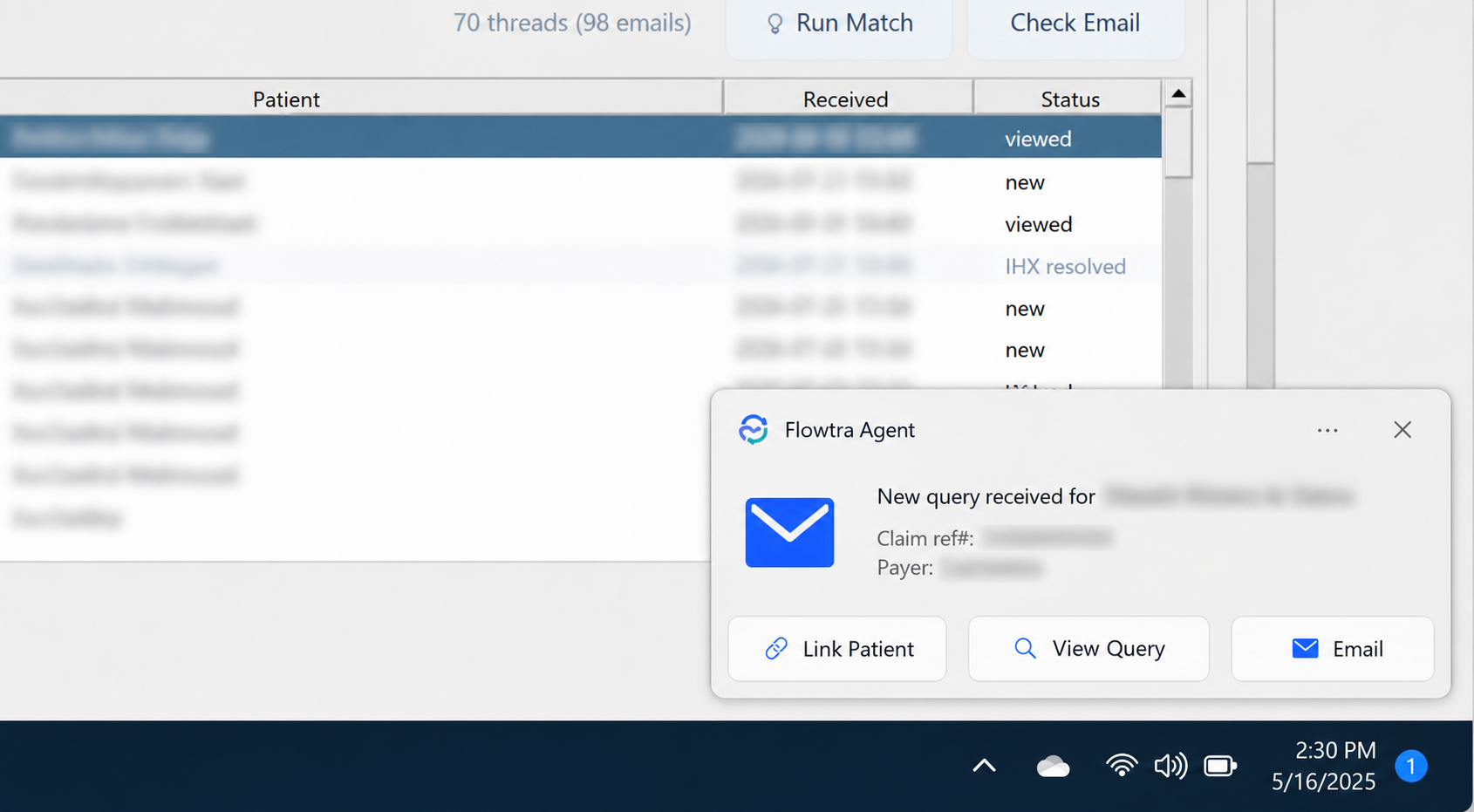
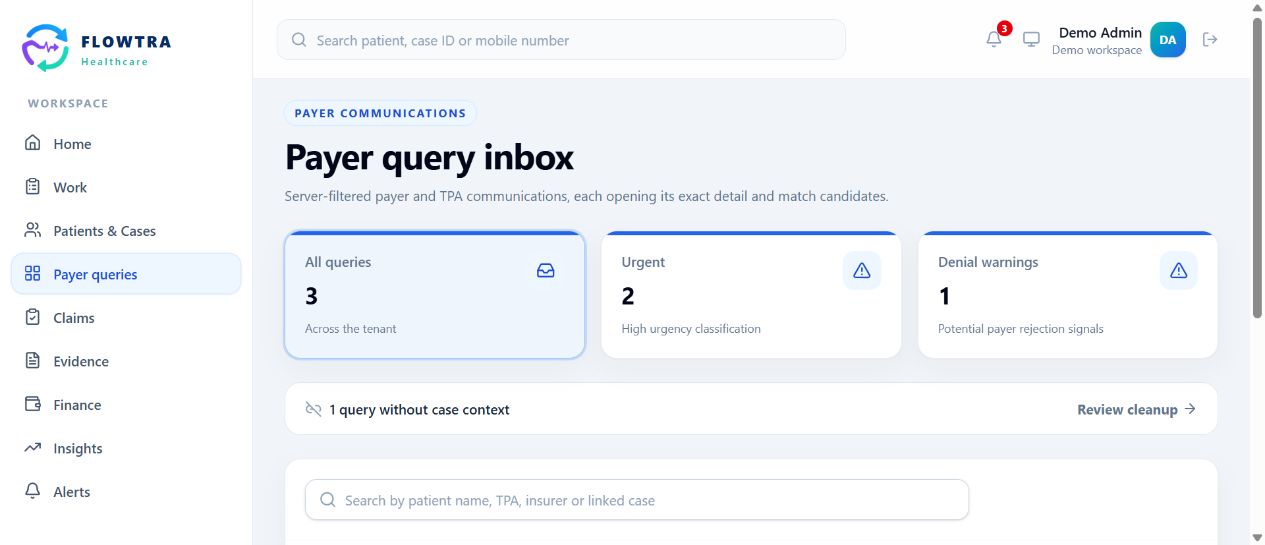
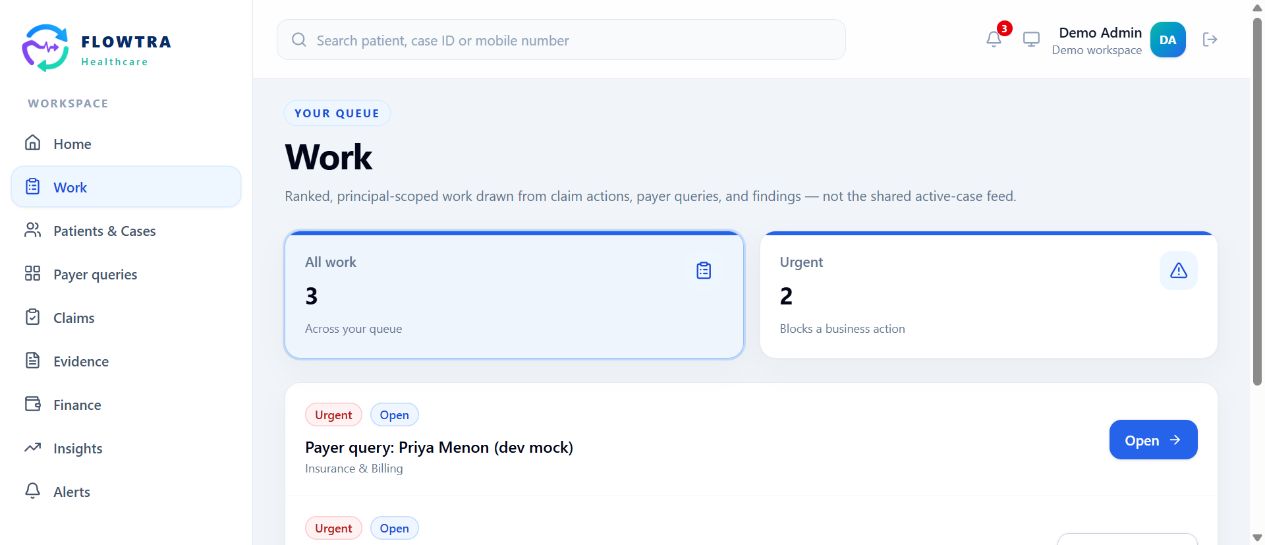
Alerts and query signals are surfaced early, with actions that move work forward.
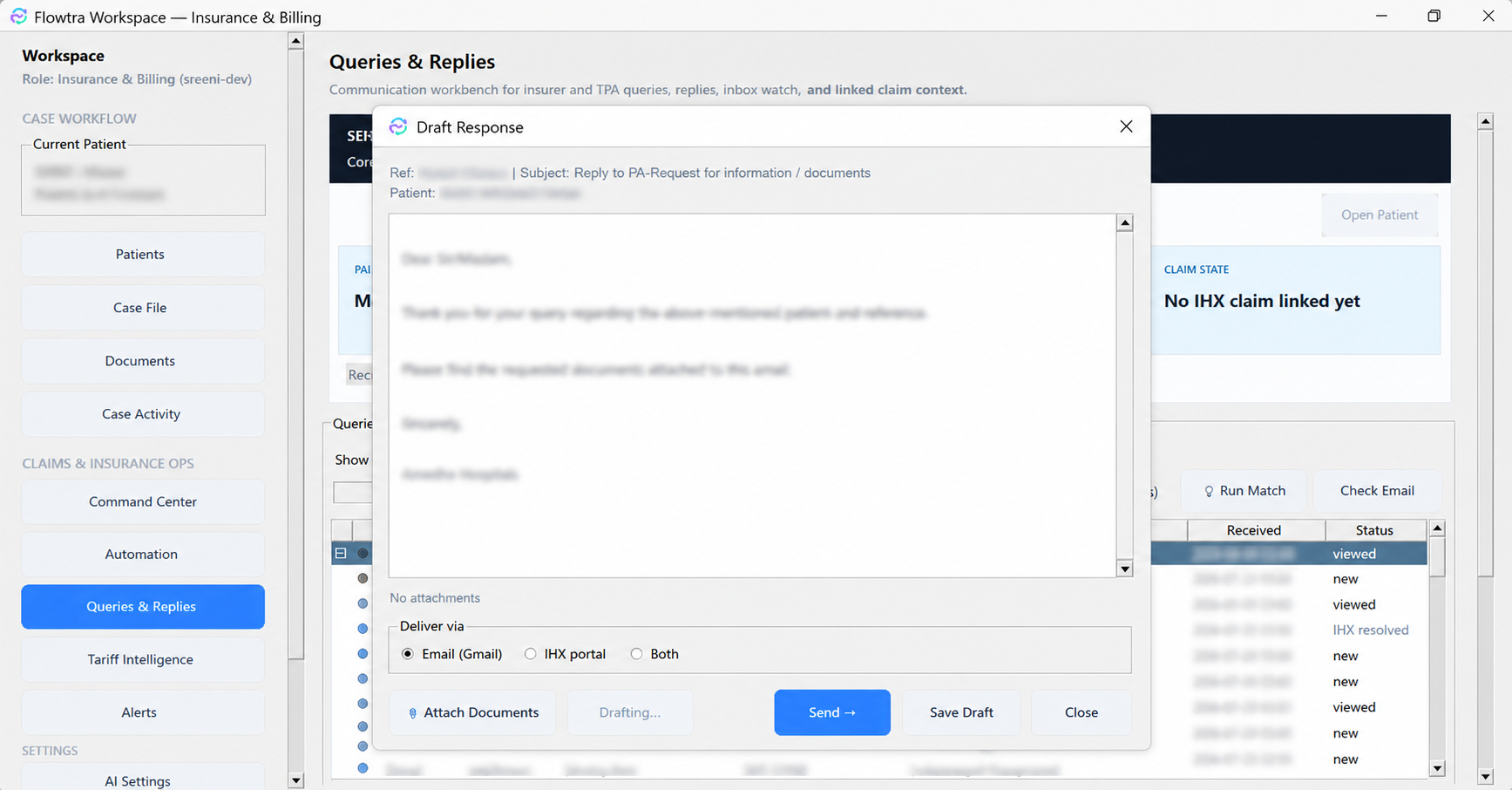
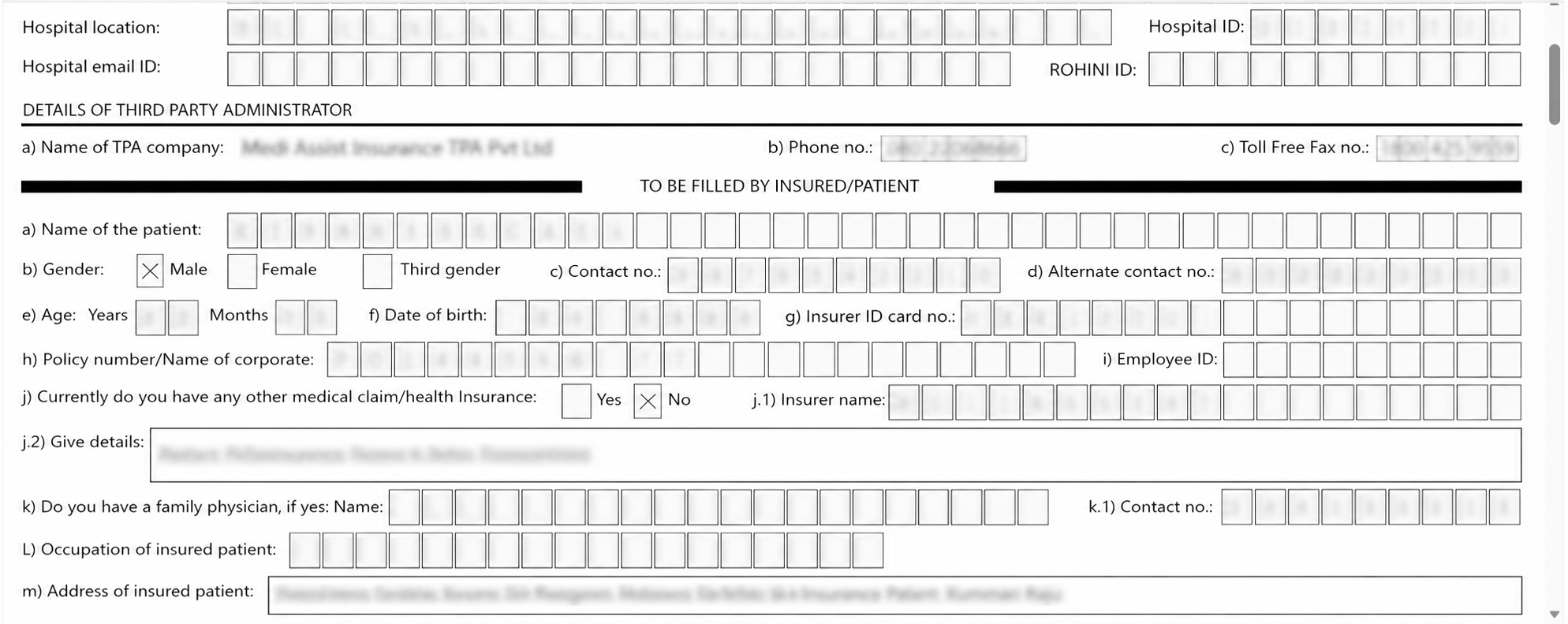
Draft replies, attachment prep, and form-prefill reduce repetitive payer work.
Product
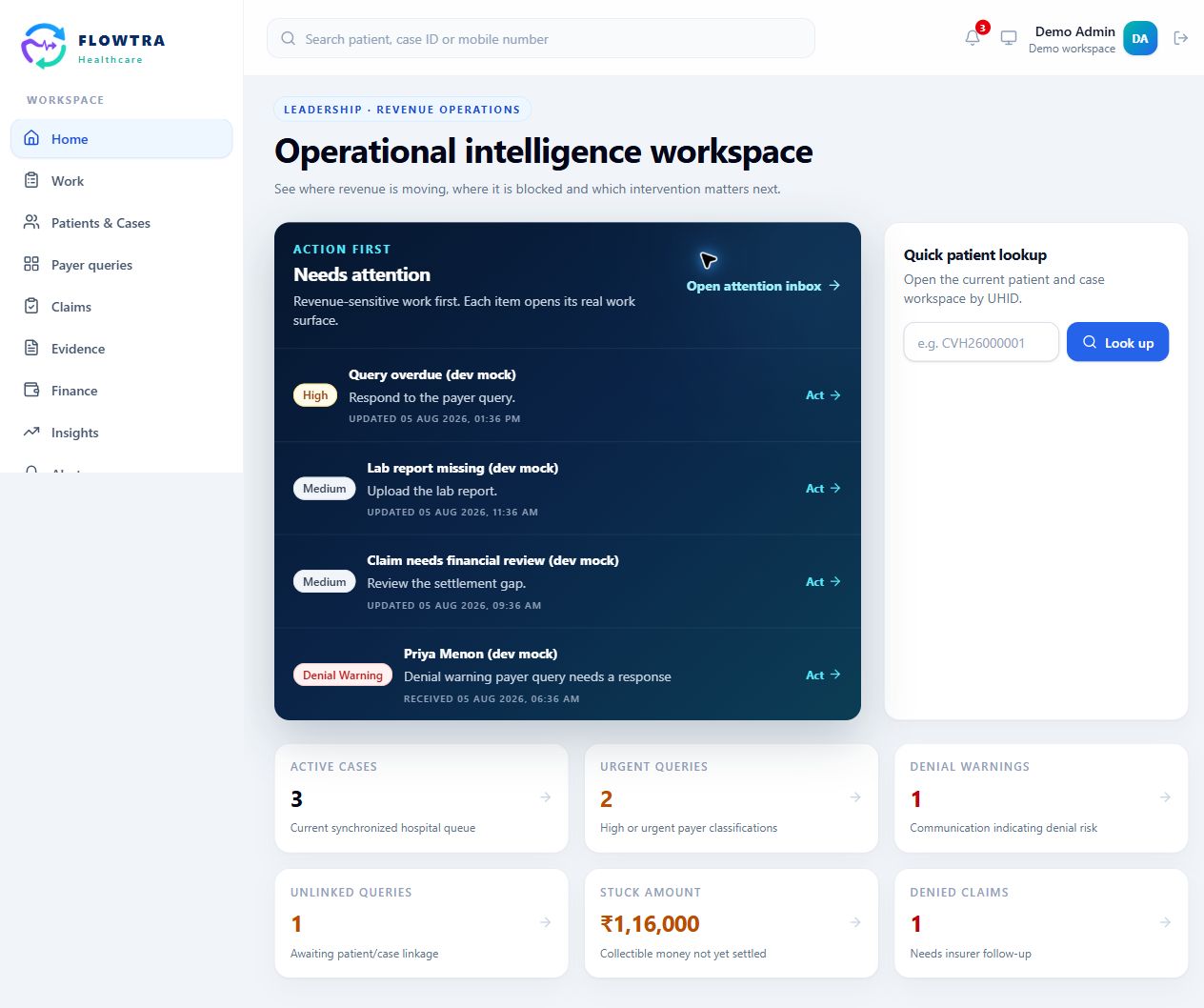
Flowtra Healthcare is an operating intelligence layer for claims, payer communication, evidence, and receivables. It helps teams see the real claim story early enough to intervene before value leaks away.
Revenue often leaks before final accounting. The product is meant to expose that earlier operational gap.
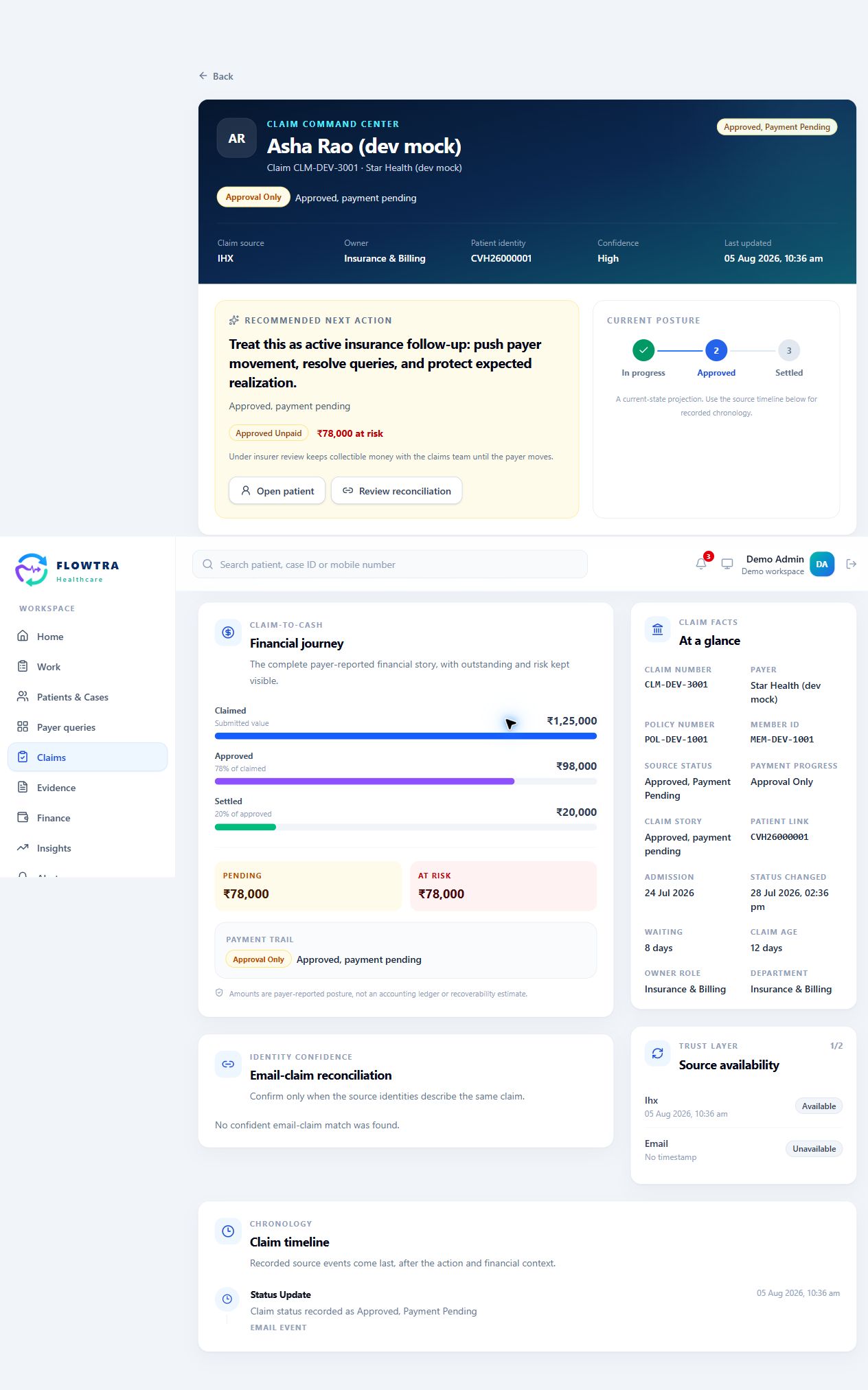
A claim status should become urgency, ownership, and next action, not just another passive data field.
Approval, evidence, communication, reconciliation, and collection should remain connected inside one working system.
Capabilities
Flowtra is not only about seeing revenue posture. It is also about shortening response loops: surfacing the event, preparing the action, and reducing repetitive submission work across payer operations.
Tariff intelligence
Flowtra can use tariff and billing rule logic to compare expected value against what the payer has approved, surface mismatches early, and recommend the next financial or operational intervention.
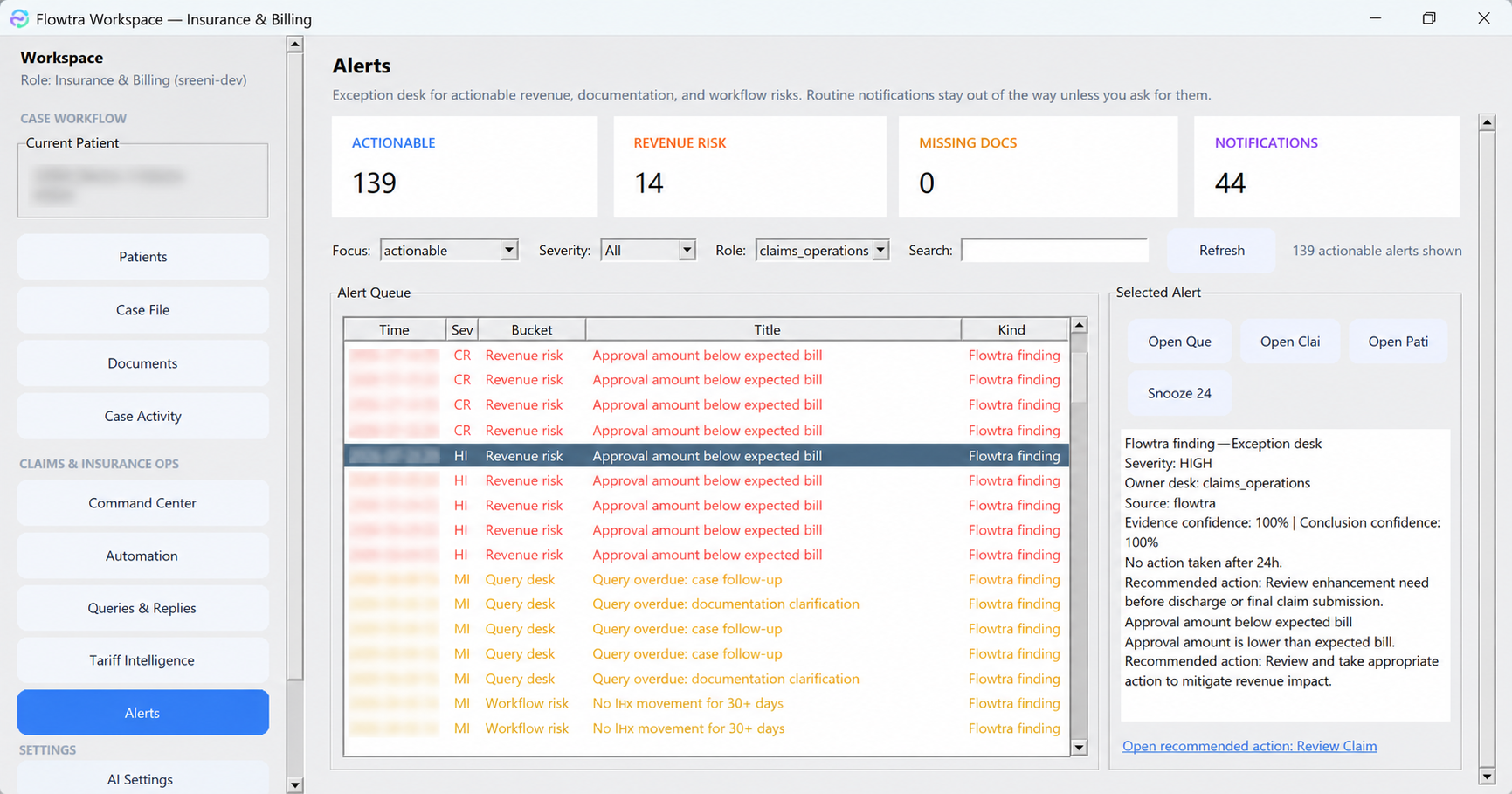
Product tour
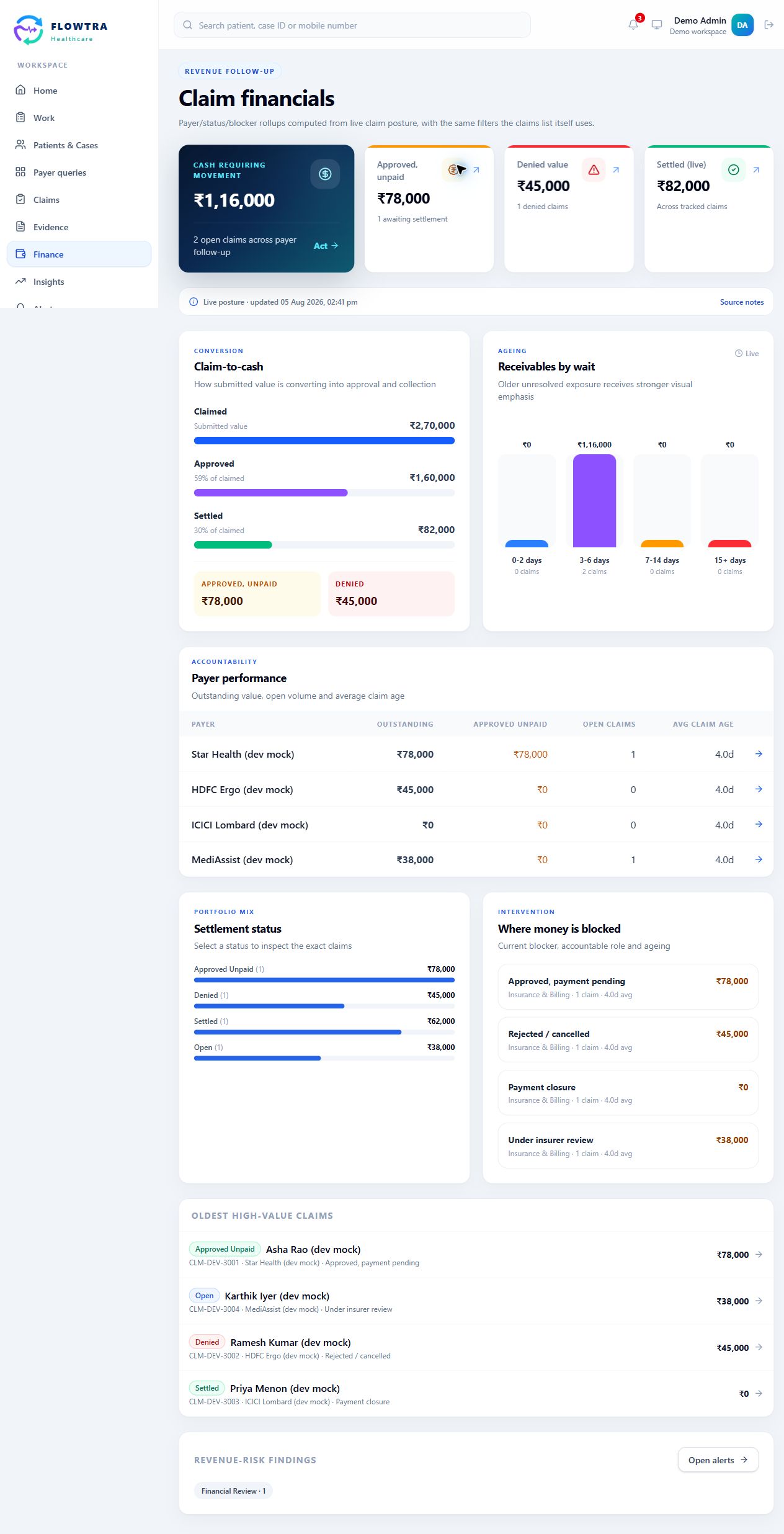
These are the core workflow surfaces behind the healthcare product: the places where revenue posture, claim state, payer communication, evidence, and finance are meant to stay connected.
Roadmap
The roadmap is not just more dashboards. It is a fuller operating system for case, treatment, payer, billing, and continuous local and cross-hospital learning loops.
A case-aware AI assistant that can answer questions about a patient, treatment, claim status, payer communication, and pending next steps using the live operating context already inside the system.
Continuous cross-hospital learning that improves query handling, claim-risk pattern detection, document readiness, tariff interpretation, and recommended interventions based on recurring payer behavior and revenue outcomes across the network.
Continuous hospital-specific learning that adapts to local billing habits, document practices, insurer mix, care patterns, and operational bottlenecks so Flowtra becomes more useful inside each hospital’s own way of working over time.
More of the repetitive revenue workflow can move from manual handling to supervised automation: draft responses, attachment packets, form generation, pre-auth prep, and payer follow-through with clear operator control.
Contact
Product contact for healthcare pilots, design conversations, and implementation.